
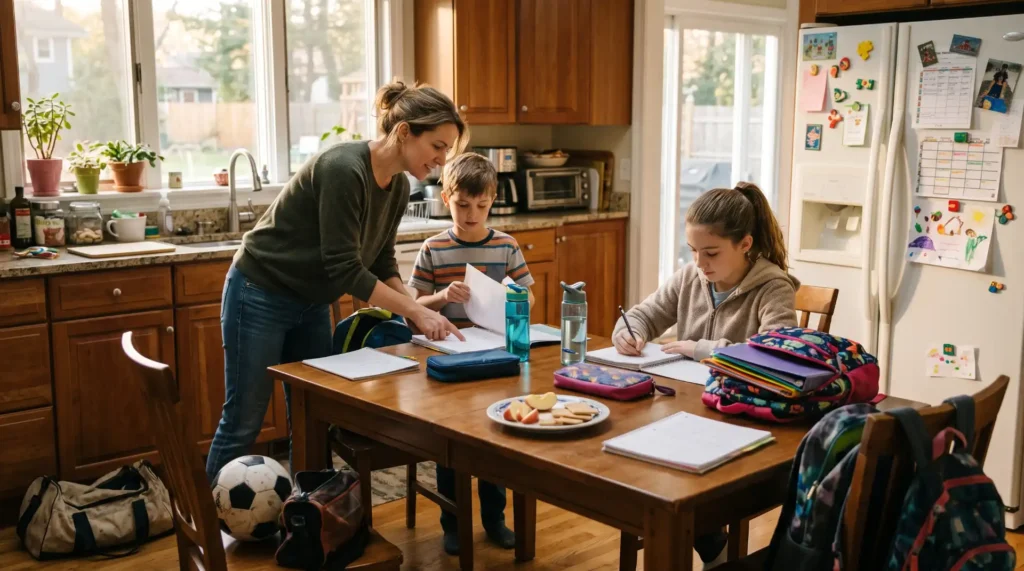
Why After-School Hours Can Feel Like a Second Job
For many moms in Morristown, New Jersey, the end of the school day marks the beginning of another busy stretch of family responsibilities. School pickup, soccer practice, dance lessons, homework, dinner preparation, and bedtime routines can quickly fill the hours between afternoon and evening. Even families with carefully planned schedules may find themselves rushing from one commitment to another, wondering where the time went.
Parents want their children to have opportunities to learn new skills, make friends, stay physically active, and discover their interests. Sports and extracurricular activities can provide these benefits, while homework helps children practice academic skills and develop responsibility. Family time, meanwhile, gives children a sense of security and belonging that cannot be replaced by organized activities.
The challenge arises when these important parts of childhood compete for the same limited hours. A child might return from soccer practice too tired to concentrate on homework, while a parent tries to prepare dinner and answer work emails. Another evening might involve driving between activities, leaving little time for conversation or relaxation.
The answer is not necessarily to remove extracurricular activities from the calendar. Instead, families can learn to balance sports, homework, and family time by setting realistic priorities, creating flexible routines, and recognizing when a schedule has become too demanding.
For families throughout Morristown and Morris County, a balanced routine should make daily life more manageable rather than turn every afternoon into a race against the clock. With a few practical changes, moms can help children enjoy their activities, stay on top of schoolwork, and maintain meaningful family connections.
1. Understand What Your Family Really Needs
Before changing your schedule, take a step back and examine what your family needs from a typical week. Every household has different circumstances, including parents’ work schedules, children’s ages, school assignments, transportation arrangements, and financial considerations.
Some families have one child involved in recreational sports, while others manage multiple children with different interests and practice locations. A parent working from home may have some flexibility but still need uninterrupted time for meetings. Another parent may commute and have limited availability before dinner.
These differences matter because a routine that works beautifully for one family may be unrealistic for another.
Identify Your Essential Priorities
Start by identifying the commitments that should receive consistent attention. These commonly include school attendance, homework, sleep, nutritious meals, personal hygiene, physical activity, and opportunities for family connection.
You might also decide that your household needs at least one quieter evening each week or a shared meal several times a week. These priorities can guide decisions when a new activity or additional commitment becomes available.
Once the essentials are clear, evaluate how much time remains for extracurricular activities. This approach helps prevent the common mistake of filling the calendar first and trying to squeeze homework, meals, and rest into whatever time is left.
Ask Whether Each Activity Is Worth the Commitment
Children benefit from exploring different interests, but they do not need to participate in every available program. An activity should provide something meaningful to the child without creating an unreasonable burden for the family.
Ask your child what they enjoy about a particular sport, club, or lesson. Find out whether they look forward to attending, feel connected to the group, and want to continue learning. If an activity consistently causes stress or no longer interests them, it may be time to reconsider the commitment.
Parents should also consider the full cost of participation, including registration fees, uniforms, equipment, travel, and the time required to attend practices and games.
A thoughtful decision today can prevent weeks of unnecessary rushing later.
2. Create a Weekly Schedule That Leaves Room to Breathe
A family calendar is one of the simplest tools for balancing sports, homework, and family time. However, the purpose of a calendar is not to fill every available space. It should help everyone understand the week’s commitments and identify opportunities to rest.
Choose a regular time, perhaps Sunday afternoon, to review the upcoming week. Include school deadlines, sports practices, appointments, work commitments, transportation arrangements, and family plans.
When everyone can see the schedule, it becomes easier to identify potential conflicts before they happen.
Use a Shared Family Calendar
A shared digital calendar works well for families who use smartphones, while a paper calendar on the refrigerator may be more effective for younger children. The best option is the one everyone can access and understand.
Give each family member a clear way to identify their responsibilities. For example, one child may have soccer on Tuesday, another may attend music lessons on Thursday, and a parent may have a late work meeting on Wednesday.
Include travel time rather than recording only the activity itself. A one-hour practice can easily require considerably more time once driving, parking, changing clothes, and returning home are included.
Reviewing the calendar together also helps children understand that their commitments affect other people. They can learn to communicate schedule changes early and prepare for the responsibilities they have chosen.
Protect One or Two Lighter Afternoons
When possible, avoid scheduling structured activities every weekday. Even one quieter afternoon can provide time to complete homework, enjoy unstructured play, read, or simply relax after school.
A lighter day is especially helpful during periods when schoolwork becomes more demanding, such as exam weeks or major projects. Rather than expecting children to manage the same workload every day, families can adjust the schedule to reflect changing needs.
Parents should also leave room for unexpected events. A child may need additional help with an assignment, a practice may run late, or a family member may feel unwell. A schedule with some flexibility is more resilient than one that depends on everything going exactly as planned.
 3. Make Homework a Predictable Part of the Afternoon
Homework can become a major source of family tension when children are tired, distracted, or unsure where to begin. Establishing a consistent routine can make school responsibilities more manageable without requiring parents to supervise every minute.
Give Children Time to Transition After School
Many children need a break between school and homework. They may be hungry, mentally tired, or eager to move around after spending much of the day in a classroom.
Create a predictable transition that suits your child. It might include changing clothes, eating a snack, spending a short time outdoors, or talking about the school day before beginning assignments.
Some children prefer to complete homework soon after arriving home, while others concentrate better after a brief period of movement. Observe your child’s behavior and adjust the routine accordingly.
A transition also provides an opportunity to reconnect. Instead of immediately asking about assignments and deadlines, give your child a chance to share something interesting, frustrating, or funny that happened during the day.
Establish a Comfortable Homework Space
Children do not need an elaborate study room to work effectively. A quiet corner of the kitchen, a desk in a bedroom, or another consistent surface may be enough.
Keep frequently used supplies nearby and reduce unnecessary distractions during focused work periods. Younger children may need help organizing materials, while older students can take responsibility for preparing their own workspace.
Parents can support learning by helping children understand instructions and divide large assignments into smaller steps. However, completing the work for them can prevent children from developing the independence they need.
Encourage children to attempt problems themselves, review their work, and ask specific questions when they need help.
If homework repeatedly takes much longer than expected, contact the teacher to discuss the workload and any difficulties your child may be experiencing. A persistent problem may require additional academic support rather than a stricter timetable.
Teach Time Management Gradually
Time management is a skill children develop over time. Younger students may need reminders about folders and assignments, while middle school students can begin using planners and checking upcoming deadlines.
Older students can practice estimating how long assignments will take and deciding which tasks require attention first. Parents can guide these decisions without managing every detail.
A useful question is, “What do you need to finish before tomorrow, and how will you make time for it?” This encourages children to consider their responsibilities and identify possible conflicts.
The objective is not to make children perfectly organized overnight. It is to help them become increasingly confident in managing their own work.
4. Keep Sports Enjoyable Without Overloading Your Child
Sports can support physical health, teamwork, confidence, and friendships. However, participation should fit a child’s developmental needs and the family’s available time.
The American Academy of Pediatrics explains that physical activity supports children’s physical and emotional well-being. Its resource, Energy Out: Daily Physical Activity Recommendations, also emphasizes that activities should be enjoyable, varied, and appropriate for children’s ages.
Organized sports are only one way to achieve these benefits. Walking, riding bicycles, playing at a playground, dancing at home, and participating in informal games can also help children stay active.
Consider the Total Time Commitment
A sport’s official practice schedule may not reflect the amount of time it actually requires. Families must account for transportation, equipment preparation, changing clothes, games, tournaments, and recovery after demanding sessions.
Before adding another activity, consider whether the schedule leaves enough time for homework, meals, sleep, and other responsibilities.
For example, a child who already attends soccer twice during the week and plays a weekend game may not need another organized activity immediately. A recreational activity during a different season may be a better option.
The right decision depends on the child’s interests and energy, not on how many activities other children attend.
Recognize Signs That Your Child Needs a Break
Children may not always explain that they feel overwhelmed. Parents might notice increasing irritability, frequent complaints about practice, difficulty completing schoolwork, or a loss of enthusiasm for an activity they previously enjoyed.
One challenging afternoon does not necessarily mean a child should quit. However, persistent exhaustion, recurring pain, ongoing distress, or difficulties with sleep and school deserve attention.
Talk openly with your child about what feels difficult. If necessary, discuss adjustments with the coach or instructor. A temporary reduction in commitments may help the child enjoy the sport again without sacrificing other parts of life.
If physical symptoms or significant emotional difficulties persist, consult an appropriate healthcare professional.
Avoid Turning Every Activity Into a Competition
Not every child wants to play at an advanced or competitive level. Some prefer recreational leagues where the emphasis is on participation, friendship, and learning.
Parents can support their children by celebrating effort, cooperation, persistence, and enjoyment rather than focusing exclusively on scores or performance.
This approach makes it easier for children to develop a healthy relationship with sports. It also reminds them that their worth is not determined by winning a game or meeting someone else’s expectations.
5. Make Family Time Part of the Routine
Family time should not be treated as an optional activity that happens only when everything else is finished. Children benefit from regular opportunities to talk, relax, and feel connected to their parents.
Fortunately, meaningful family time does not require elaborate outings or several hours of free time every evening.
Build Small, Consistent Family Rituals
A shared dinner, a short bedtime conversation, a weekend walk, or a regular family game night can create predictable opportunities to reconnect.
Choose rituals that fit your family’s lifestyle. If evening schedules are difficult, breakfast together or a brief conversation during the drive home may provide a useful alternative.
The important factor is consistency. A small ritual that happens regularly may be more realistic than an ambitious family activity that requires extensive planning.
During these moments, try to listen without immediately turning every conversation into a lesson or problem-solving session. Children often need space to explain their experiences before receiving advice.
Keep Dinner Simple on Busy Nights
Preparing an elaborate meal after work, school, and sports practice may be unrealistic. Planning a few easy dinners can reduce pressure and make it easier to eat together.
Options might include pasta with vegetables, tacos with prepared ingredients, soup and sandwiches, rice bowls, or leftovers from a weekend meal. Families can adjust meals to suit dietary needs, preferences, and budgets.
Preparing ingredients ahead of time can also make busy evenings easier. Wash produce, portion snacks, or cook an extra serving when the schedule allows.
A simple dinner is not a parenting failure. It is a practical way to preserve energy for the people and activities that matter.
Make Space for Unstructured Play
Children need opportunities to explore their own interests without following a fixed schedule. Unstructured play allows them to use their imagination, make choices, practice social skills, and discover what they enjoy.
Morristown families can incorporate informal outdoor play, neighborhood walks, library visits, backyard games, and casual playdates into the week.
For more ideas, explore The Analog Childhood Movement: Why Morristown Moms Are Choosing Screen-Free Play. Making room for screen-free activities can help families create opportunities for creativity and connection without adding another paid class or scheduled commitment.
6. Reduce the Mental Load of Managing Activities
Parents often carry the responsibility for remembering school deadlines, packing sports bags, arranging transportation, preparing meals, and keeping track of family appointments. This mental load can be exhausting even when children enjoy their activities.
Sharing responsibilities and creating simple systems can make a meaningful difference.
Prepare the Night Before
Encourage children to pack their school bags and sports equipment before bedtime. Keep commonly used items in designated places so they are easier to find when the family is rushing out the door.
Younger children may need a checklist, while older children can take increasing responsibility for checking uniforms, shoes, water bottles, and homework materials.
Preparation does not eliminate every problem, but it reduces the number of decisions that must be made during the busiest parts of the day.
Divide Responsibilities Among Family Members
When possible, share transportation and household tasks with a partner or another trusted caregiver. Discuss schedules in advance so everyone understands who is responsible for pickup, practice, dinner, and homework support.
Children can also contribute in age-appropriate ways. They might set the table, organize their sports equipment, prepare a school bag, or help put away groceries.
These responsibilities teach independence while reducing the expectation that one parent must manage every detail.
Connect With Other Local Moms
Building relationships with other parents can make family life feel less isolated. You may discover that another family has similar activity schedules, knows about local programs, or is willing to coordinate a suitable carpool.
For ideas about building your support network, read How to Build Lifelong Friendships with Fellow Moms in Morristown.
Any carpool arrangement should be based on clear communication, appropriate driver and vehicle requirements, permission from the families involved, and a reliable plan for changes or emergencies.
Community support is not only about sharing transportation. It can also mean exchanging practical advice, recommending affordable activities, or simply having someone who understands the challenges of a busy school week.
7. Balance Activities With Your Family Budget
Extracurricular activities can become expensive when registration fees, equipment, uniforms, travel, and additional lessons accumulate. Families should consider these costs alongside the time commitment.
Before enrolling, ask for a complete breakdown of expected expenses. Find out whether uniforms must be purchased, whether competitions involve travel, and whether additional fees may arise during the season.
Morristown families can also explore recreational programs, school clubs, library events, community activities, and introductory classes. These options may offer opportunities for children to explore interests without requiring a large financial commitment.
Ask organizations whether they provide financial assistance, payment plans, reduced fees, or equipment exchanges. Some programs may offer options that are not immediately obvious during registration.
Parents should also remember that children’s development does not depend on expensive activities. Informal games, family walks, reading, drawing, and opportunities to spend time with friends can all contribute to learning and well-being.
A balanced schedule should be financially sustainable as well as manageable. If an activity consistently creates pressure on the household budget, it is reasonable to explore alternatives.
 8. Establish Healthy Screen-Time Boundaries
Screens can be useful for homework, communication, and entertainment, but they can also fill every spare moment if families do not establish clear expectations.
Consider setting simple rules that protect time for sleep, meals, movement, and family connection. For example, devices might stay away during dinner, recreational gaming might follow essential homework, and the family might choose a screen-free period before bedtime.
The most effective boundaries are consistent and appropriate for the child’s age. Explain why the rules exist rather than introducing them only when an argument begins.
Parents should also consider their own habits. Children notice when adults remain distracted by phones during conversations or family activities, so modeling reasonable device use can reinforce household expectations.
At the same time, screen-free time should not become another demanding activity. Children do not need to replace every minute of screen use with a lesson, sport, or educational project. Reading, drawing, imaginative play, and quiet rest are all valid ways to spend free time.
9. Adjust Your Approach as Children Grow
A balanced routine changes as children develop. Younger children may need frequent reminders and predictable transitions, while teenagers often need more independence and greater involvement in decisions.
For preschoolers and early elementary students, focus on short activities, simple routines, and opportunities for play. Avoid assuming that a child who enjoys an activity once will necessarily want to attend multiple sessions every week.
Older elementary and middle school students can gradually take more responsibility for homework planning and calendar management. They may benefit from discussing the week’s demands and identifying conflicts before they become stressful.
Teenagers may have advanced sports commitments, challenging assignments, social plans, or part-time jobs. Involve them in conversations about priorities, sleep, deadlines, and transportation. Encourage them to propose solutions rather than simply reacting when the schedule becomes overwhelming.
Parents still need to establish reasonable boundaries when health, safety, or school responsibilities are affected. However, including children in the process helps them learn decision-making skills that will serve them well as adults.
10. A Sample Weekly Routine for Busy Morristown Families
Every household has different needs, but a sample schedule can help parents visualize how activities and downtime might fit together.
Monday: Children have a snack after school, complete homework, and enjoy a simple dinner at home. The family reviews the week’s schedule and checks upcoming school deadlines.
Tuesday: A child attends sports practice while another works on homework or enjoys free play. Dinner is prepared in advance to reduce pressure during the evening.
Wednesday: The family keeps the afternoon relatively open. Children finish assignments, read, play outdoors, or pursue personal interests without an additional scheduled activity.
Thursday: A planned practice or lesson takes place. Homework is completed around the activity, and everyone prepares school materials and equipment for Friday.
Friday: The family keeps the evening flexible. After essential responsibilities are finished, they might enjoy a movie, a board game, a favorite meal, or time with friends.
Saturday: The family attends a game, class, or community event if one is scheduled. The remaining time is reserved for errands, outdoor activities, social plans, or relaxation.
Sunday: Everyone reviews the upcoming week, prepares school supplies, plans a few meals, and discusses transportation needs. The family also protects time to relax before Monday.
This example is a starting point rather than a rigid formula. Families with weekend competitions, rotating work shifts, or several children may need a different arrangement. The important principle is to distribute demanding commitments thoughtfully and leave room for rest.
 11. Know When It Is Time to Cut Back
Sometimes, the most effective way to improve a family schedule is to remove a commitment rather than reorganize everything around it.
Consider making changes when children regularly feel exhausted, homework becomes a nightly struggle, family members are constantly rushing, or activities create persistent stress. You may also notice that a child has lost interest in something they previously enjoyed.
Begin by identifying the biggest source of pressure. The problem might be the number of activities, long travel times, an expensive program, a demanding school workload, or a lack of support with transportation.
Depending on the circumstances, the solution could involve reducing practice frequency, choosing a closer program, changing activities for the next season, arranging a suitable carpool, or protecting an activity-free evening.
Discuss the decision with your child when appropriate. Explain what is becoming difficult, listen to their perspective, and explore possible alternatives together.
Children may initially resist reducing a commitment, particularly if they have friends on the team or enjoy working toward a goal. Acknowledge those feelings while explaining that family schedules must support health, learning, and relationships as well as extracurricular interests.
Reducing activities does not mean giving up on a child’s potential. It means recognizing that children need time to rest, develop different interests, and enjoy life outside structured commitments.
12. Let Go of the Pressure to Do Everything
It is easy for parents to compare their family schedules with those of other households. When other children participate in several sports, music lessons, clubs, and academic programs, it can seem as though a busy calendar is necessary for success.
However, the number of activities a child attends does not tell the whole story about their development or happiness.
Some children thrive in competitive environments, while others flourish with one regular activity and plenty of free time. Children can develop confidence, persistence, creativity, and social skills in many different settings.
Parents should focus on whether their children are engaged, supported, learning, and getting enough rest rather than trying to match another family’s routine.
If you are unsure whether your schedule is working, ask yourself a few practical questions. Does your child still enjoy their activities? Is homework manageable? Is everyone getting enough sleep? Do family members have opportunities to talk without rushing? Can the household handle an unexpected change without the entire evening falling apart?
The answers can help you decide what needs to change.
Remember that family routines are allowed to evolve. A demanding sports season may require a lighter schedule elsewhere, while a quieter period may provide an opportunity to try something new. Flexibility is a strength, not a sign that your original plan failed.
Conclusion: Create a Schedule That Supports Your Whole Family
Balancing sports, homework, and family time is an ongoing challenge for many Morristown moms, but it does not have to mean sacrificing every quiet moment or filling each afternoon with obligations.
The key is to make thoughtful choices about what matters most. Choose extracurricular activities based on genuine interest, establish predictable homework routines, simplify meals, share responsibilities, and protect opportunities for rest and connection.
A weekly calendar can help organize commitments, but flexibility is just as important. Children need room to learn, play, recover, and develop independence. Parents also need realistic expectations and support rather than the pressure to manage every detail perfectly.
Start with one manageable improvement. You might create a shared calendar, prepare sports bags the night before, protect a lighter weekday evening, or introduce a regular family meal. Small changes can reduce stress and make daily routines feel more sustainable.
For families in Morristown and throughout Morris County, the goal is not to do everything. It is to create a routine that supports children’s growth, respects the family’s time and budget, and leaves room for the ordinary moments that make childhood meaningful.